Eagles Rookie Trade Attempt: The Jihaad Campbell Story That Shook the NFL
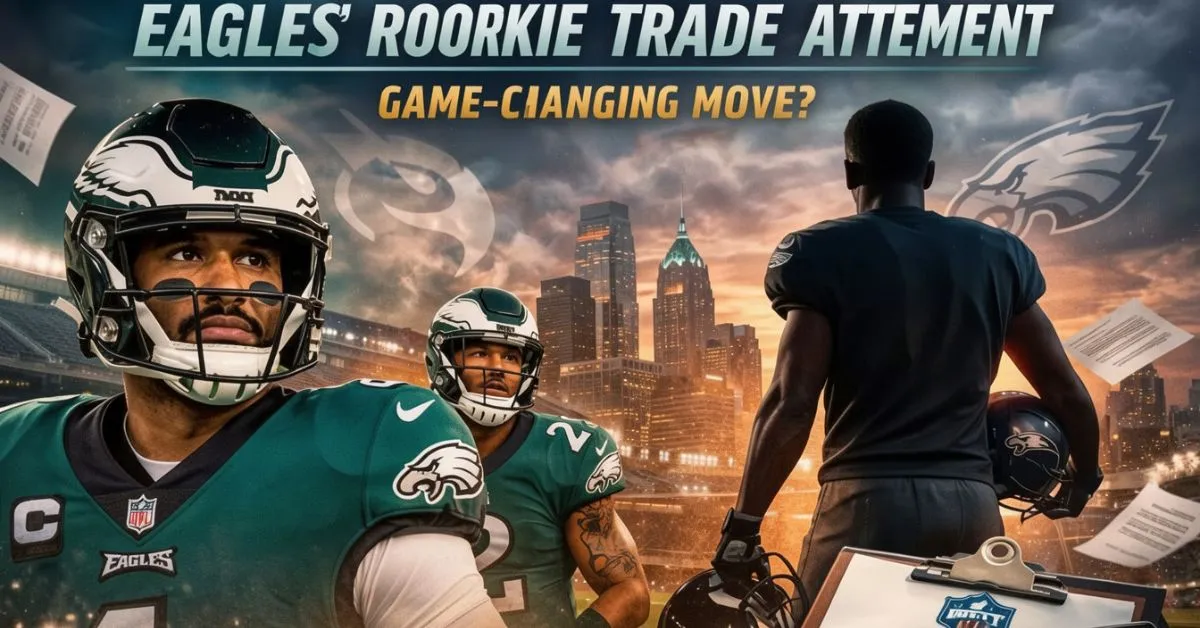
While the NFL offseason is never really quiet, some moves cut through the noise more loudly than others. One of those moments was the Philadelphia Eagles’ attempt to trade up for rookie linebacker Jihaad Campbell. Things didn’t go according to plan, but the team pulled back the curtain on something significant about how it thinks of itself as a franchise and its operation under pressure in high-stakes settings.
Here is the full breakdown of what happened, why it matters, and what comes next for the eagles rookie trade attempt.
How the Eagles Rookie Trade Attempt Identified Jihaad Campbell
Not every team does their homework the same way. The Eagles’ scouting department had flagged Jihaad Campbell early in the pre-draft process, long before he became a widely discussed name in national media.
Campbell’s profile checked multiple boxes the Eagles were specifically looking for. His ability to function effectively in both pass coverage and run defense made him a rare commodity at linebacker a position where most prospects excel at one or the other but rarely both. His athleticism translated well to Philadelphia’s defensive scheme, and the coaching staff saw how he could slot in immediately rather than needing a year or two of adjustment.
This is where the Eagles’ process showed its quality. Identifying Campbell was not luck. It reflected a scouting operation that looks beyond combine numbers and highlights to evaluate how a specific player fits a specific system. That fit was clear, and it shaped everything that followed.
The Decision to Move Up – And What It Cost
Once the Eagles committed to Campbell as a priority target, the question became how far they were willing to go to get him.
Moving up the draft board is never simple. It requires giving away future draft capital picks that have real value and real consequences for roster building down the line. Every conversation the Eagles had with other teams came down to that calculation: how much future value is this player worth today?
The front office worked through multiple potential trade packages. Moving up significantly enough to guarantee Campbell required offering compensation that gave other teams genuine reason to consider it. In a draft where several franchises had their own priorities, the Eagles faced resistance at every turn.
What the process revealed was that the Eagles were serious enough about Campbell to explore real costs not just make casual inquiries. That level of commitment from a franchise’s front office does not happen for players they are lukewarm about. They wanted him.
Why the Trade Did Not Happen
NFL draft negotiations move fast and involve more variables than any single team controls. The Eagles made their case, worked the phones, and ran into the reality that several other teams valued the same picks the Eagles needed to offer.
When multiple franchises compete for the same draft position, the price goes up quickly. At some point, the cost of moving up exceeded what the Eagles were willing to pay not because they did not want Campbell, but because sound roster management means knowing when a player’s value does not justify the price being asked.
This is actually a sign of organizational discipline rather than failure. Teams that overpay to move up the draft board often damage their roster flexibility for two or three years afterward. The Eagles weighed the cost, decided it had gone too far, and held their position.
Campbell went elsewhere. Philadelphia stayed put.
What This Reveals About the Eagles’ Strategy
The attempt itself tells you more about the Eagles than the outcome does.
Targeting a player like Campbell reflects a clear defensive philosophy. The Eagles want versatile, athletic linebackers who can handle modern offensive attacks tight ends in the seam, running backs in space, dual-threat quarterbacks on the move. Campbell’s profile fits that need precisely.
It also reflects a willingness to be aggressive when the right player is available. Passive organizations wait and hope. The Eagles picked up the phone and made calls. That competitive instinct is what separates franchises that consistently contend from those that rebuild in cycles.
The failed attempt also shows the front office’s discipline. They had a price. The market exceeded it. They walked away. That kind of decision-making protects the long-term health of the roster even when it means missing out on a player in the short term.
Impact on the Eagles’ Roster and Draft Capital
Because the trade did not happen, the Eagles retained whatever picks were on the table during negotiations. That is not a small thing. Draft capital is currency, and holding onto it gives Philadelphia options whether that means trading for a veteran during the season, moving up in a future draft, or simply having picks to develop into contributors.
The linebacker need that Campbell would have addressed has not disappeared. The Eagles will solve it through other means whether that is a later draft pick, a free agent addition, or developing someone already on the roster. None of those options are as exciting as landing a top prospect, but they are real paths forward.
What does not change is the defensive vision that made Campbell attractive in the first place. The Eagles are building toward a specific type of defense, and that direction continues regardless of this particular outcome.
What Comes Next for Philadelphia
The Eagles move forward with their roster intact and their draft capital preserved. The front office will continue evaluating options at linebacker and across the defense throughout the offseason.
More importantly, the organization’s willingness to make bold moves when the right opportunity presents itself remains clear. They identified their target, made a serious effort to acquire him, and made a disciplined decision when the cost became too high. That combination of ambition and restraint is what well-run franchises look like.
Eagles fans should not read this as failure. They should read it as evidence of a front office that knows what it wants and knows what it is worth.
Conclusion
The Eagles rookie trade attempt for Jihaad Campbell was bold, calculated, and ultimately unsuccessful but it was not a mistake. It showed a franchise thinking clearly about its defensive future, willing to compete aggressively for the right player, and disciplined enough to walk away when the price did not make sense.
In the NFL, that combination of aggression and discipline is rare. The Eagles demonstrated both in a single offseason move. How they address the linebacker position going forward will be worth watching, but the approach they showed in this process gives Philadelphia’s fanbase every reason to trust the people making the decisions.