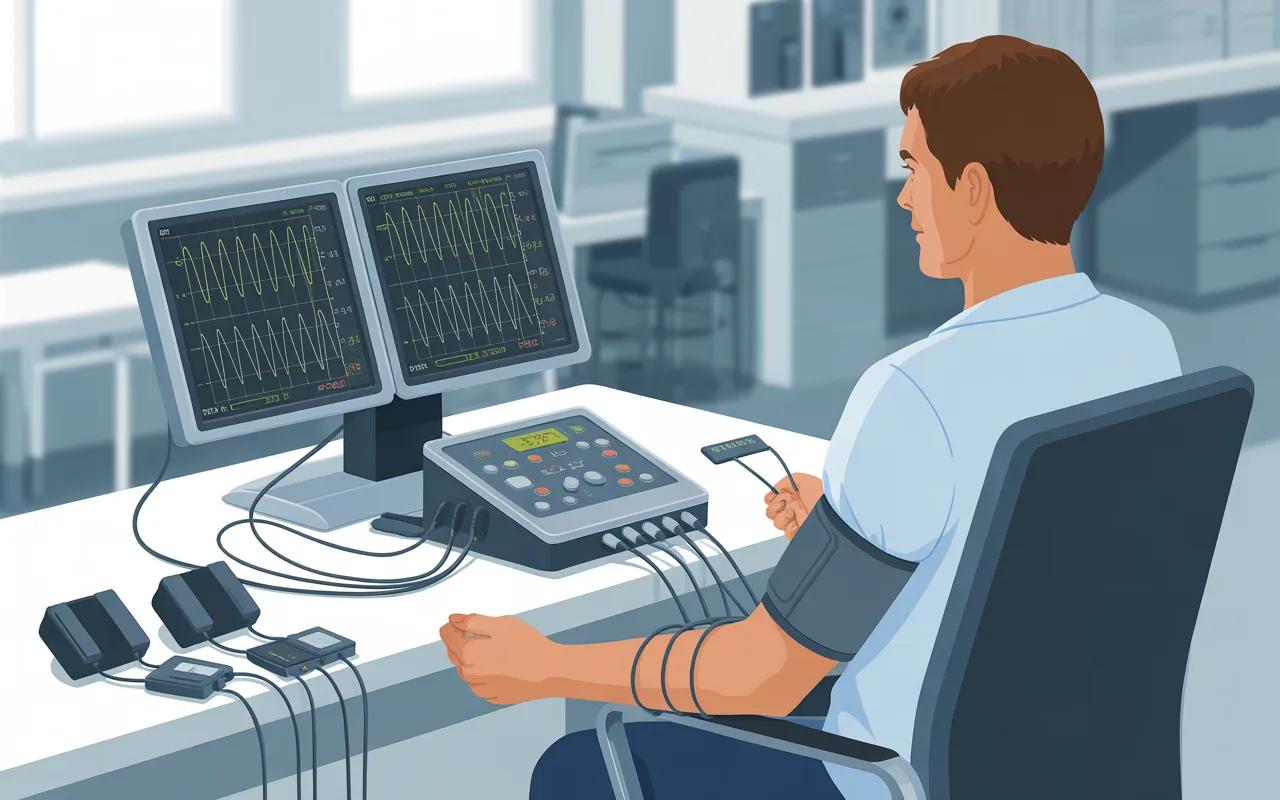
Polygraph Test: What You Really Need to Know
If you’ve ever watched a crime show or a high-stakes thriller, you’ve probably seen someone hooked up to a polygraph test, wires taped to their fingers and chest, sweating under the bright light. It’s dramatic, tense, and often treated as the ultimate truth-teller. But let’s be honest—the reality of a polygraph test is a lot less cinematic, and a lot more nuanced.
I remember my first real encounter with a polygraph. It wasn’t on TV. It was at a job interview for a position that required security clearance. I walked into a small, windowless room, heart racing, wondering if my nervousness would betray me even though I had nothing to hide. The examiner smiled, friendly but professional, and explained the process. That’s when I realized just how much myth surrounds these machines.
How a Polygraph Test Actually Works
Most people assume a polygraph can “read your mind.” Spoiler: it can’t. What it does is measure physiological responses—heart rate, blood pressure, respiration, and skin conductivity. The theory is that when someone lies, their body reacts in subtle ways that a trained examiner can detect.
Here’s the thing: your body can react to stress for a hundred reasons that have nothing to do with lying. Nervous about being tested? Sweaty palms, racing heart. Worried about looking suspicious even when telling the truth? Same deal. One friend told me he flunked a polygraph during a routine background check simply because he was an anxious guy who hates tests.
The Types of Questions You’ll Face
Polygraph exams aren’t just “Are you guilty?” They’re structured with a mix of questions designed to establish a baseline. You’ll usually start with simple “control” questions like, “Have you ever lied to get out of trouble?” or “Is your name John Doe?” These are meant to gauge your normal physiological responses.
Then come the relevant questions—the ones that actually matter. For a criminal investigation, it could be, “Did you take the missing funds?” For employment screening, it might be about drug use or prior convictions. Examiners often throw in “irrelevant” questions just to see how your body reacts when you’re not under stress.
The pattern may sound clever, but here’s the catch: it heavily relies on the examiner’s judgment. Two people could take the same test, and one might be judged truthful while the other is considered deceptive, even if both are telling the truth. That’s why the polygraph isn’t foolproof.
Why People Pass or Fail
Passing a polygraph doesn’t necessarily mean you’re telling the truth, and failing doesn’t automatically make you a liar. Anxiety, medical conditions, and even caffeine can influence the results. One guy I know failed a test because he had been diagnosed with high blood pressure and was on medication. Another passed despite having bent the truth a few times before because he had an unusually calm reaction to stress.
Here’s an interesting scenario: imagine a suspect who’s completely confident they’ll beat the system. They’re relaxed, even smug, and the test picks up barely any stress signals. They might pass the polygraph, despite lying. Meanwhile, someone innocent but nervous could fail spectacularly. It’s why courts in the U.S. rarely admit polygraph results as definitive evidence.
The Psychology Behind the Test
What fascinates me most about polygraphs isn’t the technology—it’s the psychology. The test plays on fear and self-awareness. You know you’re being scrutinized, and that alone can make your body betray you. It’s almost like a mirror held up to your own nerves.
Examiners sometimes leverage this by asking trick questions. For example, they might phrase a question so that a yes or no answer feels loaded. Your body reacts not just to lying but to the stress of being under the examiner’s gaze. Some people even try to game the system with mental tricks, like controlled breathing or thinking about calming images. Occasionally it works, occasionally it doesn’t—there’s no guaranteed cheat code.
The Myths That Persist
Pop culture has done a number on polygraphs. “Polygraph equals truth” is a phrase many people take at face value. The truth? Not even close. The machine measures stress, not honesty. And while stress often accompanies lying, it’s not exclusive to deception.
Another myth is that people can always fool the machine. Sure, some can. But more often than not, attempts to “trick” a polygraph backfire because examiners are trained to notice inconsistencies in both answers and physiological patterns.
Tips if You Ever Face One
Let’s say you find yourself in that small, tense room with a polygraph machine in front of you. Here’s the practical advice I’ve gathered from those who’ve been through it:
First, stay calm. I know, easier said than done. Your body reacts to stress, and stress can mimic lying. Simple breathing exercises or focusing on a neutral thought can help.
Second, answer honestly. It sounds obvious, but people sometimes overthink it. Polygraphs are most reliable when you’re straightforward.
Third, don’t panic over irrelevant questions. The examiner is gathering baseline data, not judging you yet. Treat these questions like warm-ups.
Lastly, understand that the results are not a judgment of your character. They’re just a snapshot of your body’s reactions in a very controlled situation.
The Takeaway
Polygraph tests occupy this strange space between science, psychology, and myth. They are fascinating tools, but far from flawless truth detectors. They work best as part of a broader investigation or screening process, not as the final word on honesty.
Here’s the bottom line
if you’re ever subjected to one, the goal isn’t to outsmart the machine—it’s to stay calm, answer honestly, and remember that your worth isn’t defined by a few wires and inked charts. They can tell a story about your body under stress, sure, but they can’t read your mind or your soul. And honestly, that’s probably for the best.
Because at the end of the day, no machine—no matter how clever—can replace common sense, good judgment, and human understanding. And maybe, just maybe, that’s where the real truth lies.