
What Reading About Bali Actually Prepares You For (And What It Doesn’t)
There is a particular phase that most people go through before their first trip to Bali. It begins with a casual search and escalates, over the course of several weeks, into something approaching an obsession. Blog posts, Reddit threads, YouTube vlogs, travel magazine features, the Instagram accounts of people who went six months ago and are still posting about it. By the time the flight is booked, the average first-time visitor to Bali has consumed more content about the island than they have about most countries they’ve actually lived in. They know which temples require a sarong and which don’t. They know that Canggu has changed significantly in the last five years and that locals have mixed feelings about it. They know that the best time to visit is between April and October and that August is busy and that the shoulder months are a sweet spot. They arrive feeling prepared. And then the plane lands and the heat hits and the smell of incense and frangipani comes through the terminal doors and none of the content quite prepared them for the reality of actually being there.
This is not a criticism of research — it’s a description of Bali’s particular quality of exceeding expectation in ways that are difficult to anticipate. The island photographs magnificently, but the photographs are always slightly wrong, always missing the dimensionality that comes from being inside the place rather than looking at a representation of it. The writing about Bali is often good, but writing operates at one remove from experience in a way that becomes obvious the moment you’re sitting in a rice terrace at dawn watching the mist clear and the light change and the herons move across the paddies with that unhurried quality that makes everything they do look considered. To read more about Bali is valuable and worth doing — it shapes expectations productively and prevents the most common mistakes — but it’s preparation for an experience, not a substitute for one, and the gap between the two is wider in Bali than in most places.
What the reading does prepare you for is the practical architecture of the island. The fact that it’s organised around distinct regions with genuinely different characters, rather than being a single homogeneous beach destination. The fact that private drivers are the default transportation and that a good driver is one of the most important variables in the quality of the trip. The fact that the Balinese Hindu calendar governs an enormous amount of daily and ceremonial life in ways that will intersect with your visit in unpredictable ways — sometimes inconveniently, when a ceremony closes a road you needed, and sometimes magnificently, when a procession appears around a corner and you happen to be standing in exactly the right place. The reading gives you a framework. The island fills it in with content that couldn’t have been predicted.
The cultural dimension of Bali is where the gap between reading and experience is widest and most interesting. You can read about Balinese Hinduism — about the animist substrata that underlies the formal religion, about the role of offerings in maintaining the balance between the seen and unseen worlds, about the way ceremony permeates daily life rather than being confined to specific sacred times and places — and come away with a genuine intellectual understanding of it. What the reading can’t give you is the felt sense of being in a place where the spiritual and the mundane are not separated. Where the woman running the convenience store pauses to place an offering on the pavement before opening the shutters. Where the hotel staff observe a silence day — Nyepi — with such completeness that the entire island goes dark and quiet for twenty-four hours and the stars are visible from the beach in a way they haven’t been all week. These things land differently when you’re inside them than when you’re reading about them from somewhere else, and the difference is the reason Bali keeps producing the particular kind of traveller who becomes slightly evangelical about the place.
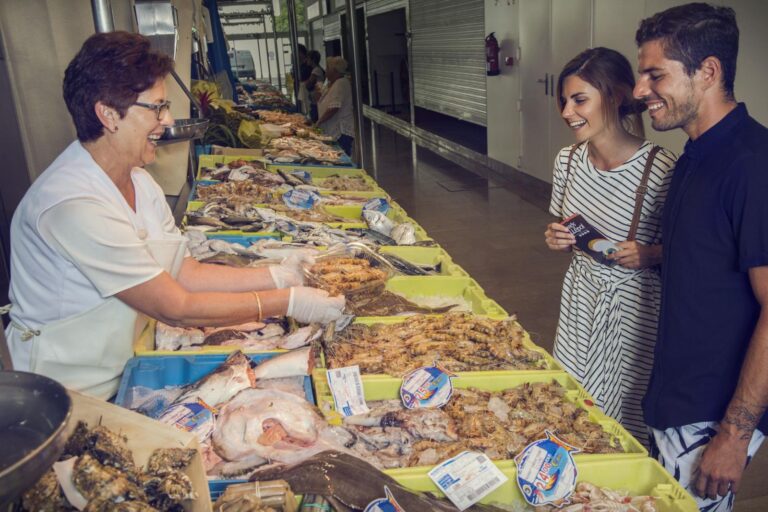
Food is another area where reading and experience diverge usefully. The literature on Balinese and Indonesian food is thinner than the cuisine deserves — it hasn’t received the international food media attention that Thai or Vietnamese or Japanese cooking has, which means most first-time visitors arrive with vague expectations rather than specific ones. What they find is a food culture that’s both more complex and more accessible than they anticipated: spice pastes built from combinations of ingredients that take years to learn to use well, proteins treated with a seriousness that produces results that seem disproportionate to the apparent simplicity of the cooking, and an understanding of balance — between heat and sweetness, between rich and acidic, between the cooling effect of certain ingredients and the warming effect of others — that reflects centuries of refined culinary thinking. The best way to understand this is to eat it, repeatedly and in as many different contexts as possible, from the family warung at the end of an unmarked lane to the serious restaurant in Ubud where someone has applied classical training to local ingredients with evident passion.
The version of Bali that exists in content — in articles and videos and Instagram grids — is real in the sense that it depicts things that genuinely exist. But it’s a curated version, assembled from the most photogenic moments and the most articulable experiences, and it leaves out the texture of daily time on the island: the long afternoons where nothing particular happens and everything feels exactly right, the conversations with strangers that go somewhere unexpected, the moment when you’re walking back from somewhere ordinary and the light does something to a temple wall that makes you stop and just look at it for a while. These are the things that make Bali what it is for the people who love it most, and they’re the things that no amount of reading can fully convey. They have to be collected in person, one at a time, over the course of days that have enough space in them to let the island show you what it wants to show you.


One Comment